


PHOTO/JOHN ANDERSON
CHICAGO, IL — The fire began over Los Gatos Canyon. The plane crashed 20 miles west of Coalinga, California, on January 28, 1948. It came down into hills which, as one commentator noted, at that time of year are “a beautiful green, splendid with wildflowers … a place of breathtaking beauty.”
The newspaper articles written at the time describe an accident involving a Douglas DC-3 carrying immigrant workers from Oakland, California to the El Centro, California Deportation Center. Those accounts give the name of the plane’s pilot (Frank Atkinson), and co-pilot (Marion Ewing). They mention the name of the stewardess (Bobbi Atkinson) and the guard (Frank E. Chapin). The stories written at the time did not include the names of any of the 27 men or of the one woman who were passengers on that flight, victims who were buried in a mass grave at Holy Cross Cemetery in Fresno, California. Those reports simply dismissed them as “deportees.”
One visitor to the crash site described the scene:
“I … can remember going to the crash site the day after the incident. … It was a cold and damp day. … The sadness of seeing the meager possessions of the passengers and the total lack of respect by those who had the task of removing the bodies will be something I will never forget or forgive.”
Three thousand miles away, a man took notice. Musician Woody Guthrie left his birthplace in Oklahoma during the Great Depression and then did plenty of “hard traveling” before ultimately ending up in New York. He was outraged by the callousness of the news stories which couldn’t be bothered to mention the names of the workers who died in the crash. Out of his anger came a song—“Plane Wreck at Los Gatos (Deportee),” a ballad in which he assigned symbolic names to the dead.
The song, as Woody Guthrie wrote it, was without music; Guthrie chanted the words. “Plane Wreck at Los Gatos (Deportee)” was not performed publicly until 10 years after the crash, when a teacher named Martin Hoffman added a haunting melody and Woody’s friend Pete Seeger began performing the song in concerts. The song’s eloquent plea for justice for immigrant workers has stirred the conscience of fair-minded people ever since.
Often referred to simply as “Deportee,” the song has been covered by a wide variety of artists including Willie Nelson; Dolly Parton; Bruce Springsteen; Christy Moore; Billy Bragg; the Kingston Trio; Cisco Houston; Judy Collins; The Byrds; Joan Baez; Arlo Guthrie; Sweet Honey in the Rock; Hoyt Axton; Peter, Paul, and Mary; Roy Brown Ramirez; Tito Auger; and Tao Rodriguez-Seeger; and Paddy Reilly, among others.
This year marks 69 years since that horrific plane wreck. The lyrics of Woody Guthrie’s song sound as if they were written just days ago, not more than six decades in the past.
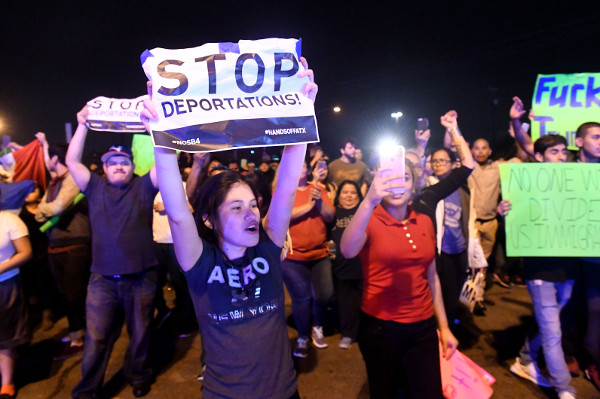
The great labor leader Mother Jones once said that we should mourn for the dead and fight like hell for the living. This year, we should pay special heed to the appeal for unity which rings out so beautifully from Woody Guthrie’s song. Today, we can honor the dead of January 28, 1948 best by speaking up in defense of the living immigrant workers of today—regardless of documentation status—and by demanding that the rulers of this country cease their cowardly attempts to use the immigration issue as a wedge to divide the workers of this country.
‘Plane Wreck at Los Gatos (Deportee)’
By Woodie Guthrie
(excerpts)
Goodbye to my Juan, goodbye, Rosalita,
Adios mis amigos, Jesus y Maria;
You won’t have your names when you ride the big airplane,
All they will call you will be “deportees” …
Some of us are illegal, and some are not wanted,
Our work contract’s out and we have to move on;
Six hundred miles to that Mexican border,
They chase us like outlaws, like rustlers, like thieves …
The sky plane caught fire over Los Gatos Canyon,
A fireball of lightning, and shook all our hills,
Who are these friends, all scattered like dry leaves?
The radio says, “They are just deportees”
Is this the best way we can grow our big orchards?
Is this the best way we can grow our good fruit?
To fall like dry leaves to rot on my topsoil
And be called by no name except “deportees”?

Chris Mahin is a writer, speaker and teacher on contemporary U.S. politics and history, particularly on the significance of the American Revolutionary War and Civil war eras for today. He is the Electoral Desk on the People’s Tribune Editorial Board.

