


‘Can’t Get Well in a Cell’: Decarcerate Sacramento Scores a Community Win
Sacramento CA. In May 2024, the police got a call reporting that a man was lying outside an EV charging station with his head on the curb. When the police officers pulled up and got out of their car, they tried to get the man to move. He whispered, “Help me, help me…ambulance.” The man’s voice was so weak it is barely audible on the officer’s body-cam footage, which was produced as evidence in a lawsuit against the City of Sacramento and County of Sacramento.
David Kent Barefield was not taken to a hospital, but to the Sacramento jail. He couldn’t walk, or even stand; he was dying. Stuffed into and then pulled from the police car, he was bodily dragged from the car into the jail and, over the next three hours, helpless and incoherent, he was dragged through the booking area, as staff mocked him for “playing possum.” At some point, he lost consciousness. By the time he reached fingerprinting, he was dead. A later investigation indicated that he died of an overdose that an application of Narcan would have reversed.
Barefield never received medical attention, according to his family’s attorney in the lawsuit. When asked if he was medically cleared for booking, a nurse replied, “He’s just old and homeless.”
In fact, Barefield’s vulnerability is typical of jail populations across the country. He was African-American: nationally, 35% of jail prisoners are Black, far in excess of their proportion of local populations.
He was unhoused: a study from Yale University and the U.S. Department of Veterans Affairs found the rate of recent homelessness among U.S. jail inmates to be 15.3%, which is approximately 7.5 to 11.3 times higher than that found in the general population. And like many unhoused, Barefield shuttled between homelessness and incarceration. Nationally, recently incarcerated people are 10 times more likely to be unhoused than the general population.
The Community Says No
On July 31, 2018, prisoners in the Sacramento County jail system, with the assistance of counsel from Disability Rights California, Prison Law Office, and Cooley LLP, filed the Mays lawsuit against the county for the brutal and inhumane conditions in the jail. This class action lawsuit alleged that the County unconstitutionally failed to provide basic mental health and medical care to prisoners, along with other claims.
This year, on February 26, community members crowded into the chamber of the Sacramento Board of Supervisors to testify against the board’s drive to expand the jail through construction of a 100-bed annex that will cost as much as $2 billion over a period of 30 years.
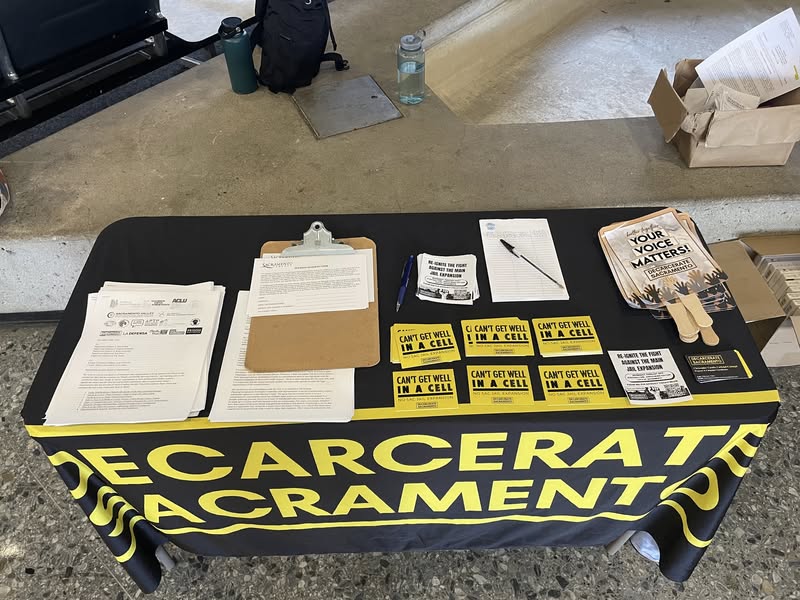
The opposition is led by the organization Decarcerate Sacramento, which has been fighting the expansion of the jail for more than five years, supplying expert testimony, organizing neighborhoods, and pressuring the board to devote the community’s precious resources to expand community-based treatment and support instead of expanding the jail. Finally, the opposition carried the day, backed by a consultant’s report that exposed the wasteful and counter-productive proposal. The board voted to “pause” the expansion, pending further study. Opponents of the jail plan saw this as a win–still, they anticipate more work and struggle ahead.
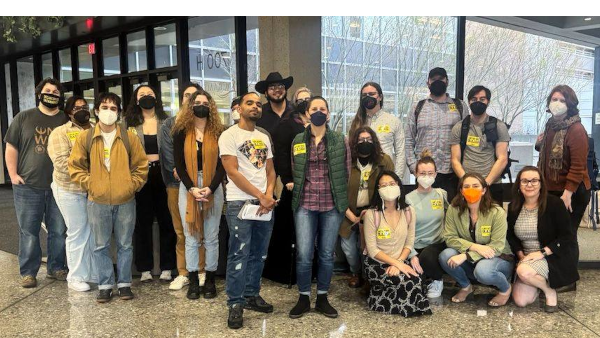
The testimony of Decarcerate Sacramento members at the hearing—many of whom wore stickers that said “Can’t Get Well in a Cell”—challenged the board’s use of the Mays Consent Decree as justification for jail expansion. Courtney Hanson condemned the guards’ treatment of inmates. “It was not the outdated building but the sadistic behavior of the guards who treat people as less than human, as not worthy of dignity, sometimes not even worthy of living another day,” she said.
The original goal of Mays providing dignified treatment to inmates and preserving their health has been twisted, Dylan Hoy-Bianchi told the Board of Supervisors. “The County has cynically warped it into a justification for a billion dollar expansion which would not address the main concerns of Mays and would instead give a massive gift, a shiny new toy, to the very entity, the Sheriff’s Department, that got sued for mistreating inmates.”
“Focus on fixing the conditions causing inmates to suffer,” Hoy-Bianchi added.
At the hearing, Decarcerate Sacramento organizer Christopher Camilo Carbajal-Cabarjal attributed the deadly conditions at the jail not to the facility itself, but rather to the its deeply ingrained culture of devaluing human life and disregarding suffering—the casual and deadly brutality that cost Barefield his life.
“The crisis isn’t the jail—it’s the harm inflicted on people inside,” Carbajal-Carbajal said. “People call us from behind those walls, sharing stories of preventable deaths, medical neglect, and an under-resourced mental health system leaving individuals to suffer or self-harm.”
Carbajal-Carbajal also cited the work of Mary Perrien, a Mays consent decree medical expert, who said that every patient she interviewed was placed at an inadequate level of care, many facing immediate harm.
“Expanding the jail won’t solve these failures—it will only reinforce them,” Carbajal-Carbajal said. “More beds mean more suffering, not solutions. The Sheriff’s Department has a documented history of ignoring court orders and delaying life-saving treatment. Simply put, you cannot build your way out of human rights violations.”
As Carbajal-Cabarjal emphasized in his closing remarks, “And let’s talk about cost—$2 billion over 30 years. Supervisors, community members here today, those watching online: I pose this question, what could you do with $2 billion?” He proposed affordable housing, fund community-based mental health services and violence prevention initiatives, among other alternatives.
“We could choose care over cages,” Carbajal-Carbajal said. “Do note, a new jail isn’t on that list—and it shouldn’t be on yours.”


