 Editor’s Note: This story was sent to the People’s Tribune by the author, Diane Nilan. See original publishing on Medium here.
Here’s a quick refresher course in child development. Unless a person dies young, they grow up to be an adult, right? Young ‘uns have little control over how they’ll develop. What happens to a baby or toddler impacts their brain function as they get older, good or not so good.
Adults responsible for infants have a major impact, good or not, or somewhere in-between. But even they don’t have total control. What happened to them when they were infants or in earlier times can have an effect on their brain and physical health.
Why am I dwelling on this? To make a case to stop this growing movement of criminalizing homelessness
Cities, counties, states, and our federal government seem hellbent on persecuting the most vulnerable among us, those without homes. Not only are adults affected, but kids get swept up into this needless persecution, too.
I’ve witnessed elected officials exhibiting inhumane actions towards groups of people, e.g. homeless individuals on the streets, by imposing cruel restrictions and regulations. My county officials recently passed an ordinance to criminalize homelessness that sounds like a cookie cutter legislation from other parts of the country. It’s sadly obvious that they don’t understand homelessness, or, if they do, they’re out to make lives even more miserable.
Press enter or click to view image in full size

As a former shelter director and someone who has worked in this arena for the past 40 years, I have direct experience. Yes, I’ve seen my share of dysfunctional behavior on the part of people without homes. We could also digress and talk about dysfunctional behavior on the part of people with homes, including those living in a big white house in DC. But let me veer back to a different point.
Why do we let stereotypes prevail?
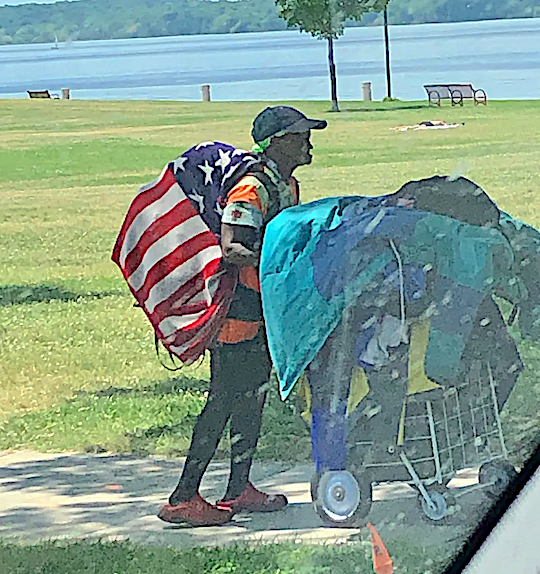
When homelessness is discussed by people outside the “industry,” it almost always centers around stereotypical bedraggled adults, mostly male, who seem scary to those unfamiliar with the homeless population (which includes a variety of personalities, many quite pleasant). This short film, The Man in the Dog Park, conveys this common fear-based confusion quite well.
But this film doesn’t touch on the issue of families and youth homelessness, a subject I’ve spent the past 20 years chronicling (www.hearus.us).
When will we look upstream?
What we continue to overlook, intentionally or not, is the serious hardships kids experience, known as Adverse Childhood Experiences (ACEs), which can have a lifelong detrimental impact on their mental development and physical health. This can be reversed with a variety of interventions, but left to fester can cause impaired brain function.
When running a shelter, I didn’t know about the impact of ACES. I’d see adults do something totally stupid. “What were you thinking?,” I would scowl. And I’d never get a satisfactory response. If I could have had a non-threatening conversation with the person, asking about their early life, I would probably hear about their horrific childhood trauma.
Press enter or click to view image in full size

We have finally figured out that childhood trauma has a significant impact on a person’s development. If we intervene, it could turn things from bad to better. An expert in this field, Kristen Holderle, PhD, points out,
“Your flight or fight response, your neurodevelopment, gets off track. It suggests that if you can intervene early, when someone has a childhood traumatic event, it could have a huge lasting impact on their life.” — The University of Rochester Medical Center
Unaddressed trauma festers, creating behavior issues in kids and adults. Here are some consequences of ignoring childhood trauma:
- Broken relationships result in a ripple effect of multi-generational trauma.
- Mental and physical health issues can become chronic.
- Painful, expensive, and destructive repercussions including unstable employment, criminal activities, addictions.
- Affiliations with other traumatized persons that often lead to further problematic activities.
Why create societal trauma?
The principles of individual trauma can be applied to society. Groups of people exhibit trauma-impacted behaviors, e.g. ICE agents brutalizing people of color or police persecuting people without homes, done in the name of the law. Those ruthlessly tormenting innocent people likely have a history of trauma themselves.
Press enter or click to view image in full size

Who gets harmed when criminalizing homelessness?
This type of ordinance, created and promoted by the anti-homeless Cicero Institute, feeds the street-to-prison pipeline, lucrative for the for-profit prison industry. It does nothing to solve homelessness.
Prosecuting and fining the adults on the street can harm kids. Some families living in these various “unlawful” situations get swept into this non-productive prosecution. Parents, living on the streets for a variety of reasons, may be contributing financially to their families staying in other arrangements. Being jailed and/or fined keeps them from supporting their families.
Making life more miserable for those living on the streets adds to the debilitating trauma impact, which does no good for anyone. At the very least, it’s a waste of our tax money.
Current chaotic action on the federal level guarantees more homelessness for adults and kids. The US Department of Housing and Urban Development, HUD, has been issuing confusing edicts about their upcoming budget cuts and massive restrictions to program regulations. If they get their way, thousands of individuals and families will become homeless again (a dreadful consequence), and countless others will lose any chance to get permanently housed.
How will this impact the rest of us?
Many people are so caught up in surviving these economic hard times that they’re not seeing the pending danger that pushes them closer to homelessness.
Rents have been skyrocketing, thanks in large part to private equity’s investments in housing. Brian Goldstone, in his enlightening book, There Is No Place for Us, shines a harsh light on how greedy investors are sweeping up not only private housing but extended stay hotels where many homeless families end up. In The Nation’s recent interview about his book, Goldstone points out,
“The same private equity firms pushing people out of their rental housing are also cornering the market on the very places the evicted are forced to go when they lose their stable housing — and profiting off of that.”
Add to the hard times the pending surge of health care costs as ObamaCare is wiped out and whatever inadequate plan Congress comes up with gets unleashed. SNAP cuts and additional restrictions will increase food insecurity. Utility rates are soaring thanks to the AI data centers. Anyone who even looks like an immigrant now faces kidnapping by our lawless gestapo-like force.
We seem to have fallen into the era of unconstrained cruelty.
I ask again: What good does criminalizing homelessness do?
For more stories about poverty, homelessness, and social justice, follow Fourth Wave. Have you got a story or poem that focuses on women or other targeted groups? Submit to the Wave!