


When it is said that hurt people tend to hurt others, the phenomena behind that truth is the contagion of trauma. For over 30 years, since doctors Vincent J. Felitti and Robert Anda developed a methodology for measuring adverse childhood experiences (ACEs), behaviorists are in agreement.
The research of doctors Felitti and Anda, along with a plethora of subsequent studies, demonstrate that most trauma occurs in the home, ranging from violence to separation from parents to neglect. ACEs has a profound effect on children, often altering their worldview and self-concept.
Exacerbating domestic trauma are the hardships of social trauma. These list anywhere from bullying to discrimination to poverty. The bottom line is that when basic human needs go unfulfilled, traumatization often occurs. One of the implications of traumatization is that hurt people tend to hurt others.
According to the Compassion Prison Project, incarcerated people average at least four ACEs across the board. Neglect is one of ten ACEs listed in doctors Felitti and Anda’s typology. Interviews of youth who join gangs almost always convey that the driving force behind their membership was real or imagined neglect from caregivers.
Picture a single mother working two or three jobs, as is often necessitated in today’s framework economy. The well-intentioned mother is simply trying to provide to survive. However, the child’s limited knowledge of the world at large limits the child’s perceptions. Neglect produces anger as a common response.
In fact, we all project on to others at some point. Particularly when our feelings are ignited by a trauma response. There is no question that trauma is pervasive in our communities, and trauma breeds apathy, disconnection. This is why Taming Trauma promotes a robust, trauma-informed society.
As a whole, we often use the word trauma, but very few in society can actually
define it or its implications.
This point is most salient with policy makers. Yet almost every human activity can result in trauma in some form. Politicians that ignore or neglect the realities of trauma do so at the detriment of us all. Even worse, political leaders who make policy in ignorance of trauma’s implications often inadvertently contribute to the contagion of trauma, subverting public safety.
Think economic policies, over-policing, wayward immigration policies, war. These are some of the policies that can and have historically produced mass traumatization in our own citizenry.
These are policies that potentially spread the contagion of trauma.
The world is primarily for and about people. Therefore, the litmus test for policy makers going forward should be empathy. Politicians who have a record of harmful policies, who put profits, corporations, and especially politics, above people don’t muster.
Empathy is what it takes to heal trauma and reconnect people, and the best place to start healing is to demand empathy as a core tenet of political qualification.
Sources:
Compassion Prison Project, www.compassionprisonproject.org
Dr. Vincent Felitti, www.drvincentfelitti.com

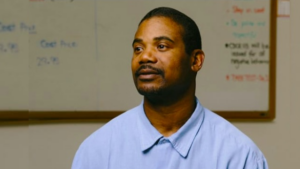
Dortell Williams is an incarcerated person in his 37th year of a Death by Incarceration sentence. He has educated himself inside, earning a BA degree in Communication Studies at California State, Los Angeles, and is a founding member of Taming Trauma. To learn more about Dortell and support his quest for freedom, go to www.freedortellwilliams.com.

