


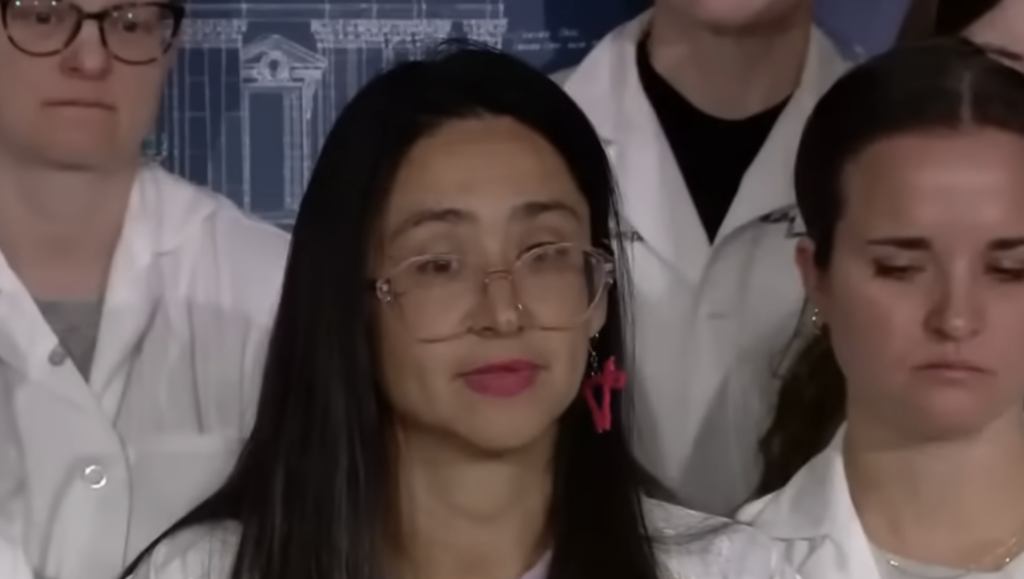
Editor’s note: On Jan. 20, a group of Minnesota physicians from various hospitals and clinics and representing several different specialties held a press conference at the state Capitol in St. Paul to denounce the presence of ICE agents in hospitals and the horrific impact the ICE raids are having on patient care and on healthcare workers. In often emotional testimony, they described instances of ICE agents invading patients’ privacy during examinations and refusing to leave, and ICE agents being abusive toward hospital staff. They talked of a woman with four young children, all of them dangerously sick with flu, but terrified of taking them to the hospital for fear of being detained. They spoke of a pregnant woman who almost gave birth at home because she was afraid to leave her house, and a cancer patient who was arrested and sent to Texas without his medicines. They described hospital staff of color being afraid to come to work. They spoke of learning that Renee Good still had a pulse eight minutes after she was shot, but was denied medical care by ICE. Their stand has touched a nerve and inspired millions across the country. Below is a lightly edited transcript of the press conference, as aired on ABC 6 KAAL-TV.
State Sen. Matt Klein: It’s very inspiring to see all these medical colleagues here, speaking to this issue, coming down to the Capitol to express their fervent concern about what is happening in the state of Minnesota and how we care for our neighbors and how we care for our patients. I’m a state senator from Senate District 53. I represent the southern metro area and I have for the last nine years. I am a physician and internal medicine physician currently at Mayo Clinic, but for the bulk of my medical career, at Hennepin County Medical Center. And let me say that in my capacity as a physician for the last 35 years, I have cared for numerous patients where there were legal and formal interactions with law enforcement, particularly at Hennepin County Medical Center, where our local law enforcement and our sheriff’s deputies have a firm understanding when they have a patient in legal custody, when they have a patient from the jail or from the prison, they’re able to bring that patient in, in full discretion, and interact safely and with privacy with the medical staff and do it well.
I’ve never heard a concern over 35 years of practice that a patient’s rights were violated, that medical care was impeded or that privacy was violated. And yet we hear these stories now for the last couple of months here in the state of Minnesota, that in our hospitals and in our clinics, patients are afraid to come in and seek care, and when they do come in, ICE is pursuing them, with or without legal means or justification for that. And our medical staff feel intimidated and afraid to do the good work that they should do and impeded from doing that good work. This is intolerable to us as practitioners and I believe it’s intolerable to the good people of Minnesota who know how medical care works in this state.
This morning I learned for the first time through an MPR story that Renee Good still had a pulse eight minutes after she was shot by an ICE agent. And yet, the offer to administer aid from a physician on the scene following his Hippocratic oath, was denied. I can’t say how much that stirs the blood of everyone behind me here, as we try to fulfill our obligation, our oath and our duty to care for the people of Minnesota. And I believe it stirs the blood of every patriotic Minnesotan who knows how we treat each other in this state. So that is what we are here to speak to today as healthcare professionals.
‘All patients, regardless of background, must be able to access emergency medical care without fear or delay.’
Dr. Emily Wagner: I am here on behalf of the Minnesota Chapter of the American College of Emergency Physicians. Minnesota ACEP is dedicated to the health, safety and dignity of all individuals who seek care in our state’s, emergency departments and pre-hospital settings. We want to partner with everyone as we are committed to ensuring the safety of all our patients and staff, especially during times of discord and violence. In light of recent events, our priorities remain clear. Number one, uninterrupted access to care. All patients, regardless of background or circumstance, must be able to access emergency medical care without fear or delay. Emergency departments serve as a vital safety net for the community and any factors that deter individuals from seeking necessary care endanger public health. Number two, protection of emergency responders and medical personnel. EMS providers, emergency physicians, nurses, and support staff must be able to perform their duties without interference or obstruction as timely care should never be hindered.
Number three, coordination at the scene of emergencies. During emergencies involving law enforcement, clear communication and established protocols between medical responders and other agencies are essential. Ensuring that medical personnel can reach and treat critically injured patients promptly is a fundamental component of life-saving care. Number four, patient-centered standards in hospitals and clinics. Emergency departments and hospital facilities must remain safe spaces where patients and families can seek care. Policies and procedures should protect patient privacy, clinical decision making and the prompt delivery of medical services patients brought in by any authority should receive medical evaluation and treatment according to medical need, not status.
And finally, number five, upholding the mission of emergency medicine. Our commitment is to human life and wellbeing. Emergency physicians and care teams stand ready to care for all members of our community regardless of the context in which they arrive. We advocate for practices that prioritize health outcomes, minimize harm, and support the trust that patients place in emergency medical systems. Minnesota ACEP encourages all involved parties, including medical professionals, first responders, and public safety officials to work collaboratively to ensure that emergency care is accessible, timely, and delivered with compassion to every person in need. Thank you.
‘ICE enforcement in our communities is directly harming my patients and our kids.’
Dr. Janna Gewirtz O’Brien: I’m the President-elect of the Minnesota Chapter of the American Academy of Pediatrics. We are the leading voice of children’s health and wellbeing in our state. I’m here representing more than 1000 pediatricians across our state who are committed to improving the health and wellbeing of children all across Minnesota. We are here for the kids. As a pediatrician working in the heart of downtown Minneapolis, and as a mom whose 10-year-old co-wrote this statement with me, I can attest firsthand that ICE enforcement in our communities is directly harming my patients and our kids. And to other parents watching these atrocities unfold in front of them in their communities, we should all be very, very concerned. And here’s three reasons why. First, exposure to violence and the threat of family separation causes trauma for kids when ICE enforcement occurs in or near places where children should be safe. Like homes, like schools like hospitals — and we know they’re in hospitals, right? — children experience fear that disrupts their sense of stability. We’ve seen kids face down in handcuffs in front of their public schools. Teens have been ripped from their homes without coats in sub-zero weather and without their parents present. Let’s just be real.
Parents have been detained while waiting for the bus with their kids. Family separation is not a temporary disruption. It is a traumatic event with lifelong consequences. And for Renee Good’s children — I know other parents are thinking about them — they deserve better too. We need ICE out of our communities. Second reason why: Children and families are avoiding potentially life-saving medical care because they are terrified to leave their homes. When ICE agents are in and around our hospitals — which again, we know that they are, including my own — parents are rightfully scared to come in. I’ve seen babies miss their jaundice follow-ups or parents straight up say, ‘Hey, I refuse to come back in. I really don’t feel safe here.’ We’ve seen moms that have called and said, ‘My baby’s having trouble breathing, I don’t know if I should come in.’ Unacceptable. And we’ve seen a burst appendix that could have been detected days earlier had somebody not been afraid to come in.
Across our state, kids are missing their routine checkups. They’re delaying care. They’re not seeking help, and they’re weighing this like fear of putting their family at risk against the health of their child. This is an impossible decision that no parent should ever be in. Healthcare settings need to be safe healing spaces, and we need ICE out of healthcare. Third and finally, when ICE is perpetrating violence in communities, kids get caught in the crossfire. Consider Destiny Jackson and her six kids. They were coming home from a basketball game. They were in their car. They were not a part of a protest, and they found themselves in a car full of tear gas with airbags deployed.
Destiny could have been any one of us as she administered CPR to her infant child. And when their parent asked for help, there was a delay in getting emergency medical care. Again, we see a theme. This is unacceptable. Chemical weapons have no place in our neighborhoods or in our schools. They can have life threatening and long-term effects on children. It’s only a matter of time before a Minnesota child dies as a result of this recklessness. We need ICE out of our state. To close, I have a message for Minnesota parents: Your pediatricians and all of us are doing every single thing that we can to mobilize. We’re working to get kids lifesaving care in their homes and in their communities. Your pediatricians are still here and we’re all in this together. I’m going try this in Spanish [repeats message in Spanish]. If I could say it in Somali, I would do that too. We are in the fight. We demand that ICE stop tactics of terror and leave our state. Our patients, our children, deserve to be safe, to be healthy, and to grow up free from fear. And to our leaders: Protecting kids is not a political act. It is a moral responsibility we all share.
‘We swore an oath to take care of all of our patients with unbiased, respectful, and dignified care.’
Dr. Lisa Mattson: I’m the current president of the Minnesota Medical Association, an organization that represents over 10,000 physicians in Minnesota. As president. I personally have been made aware of the presence of ICE agents in our hospitals. I had a report of a detainee in the Emergency Department with injuries ‘inconsistent with accidents.’ I also had a report of a vulnerable adult who didn’t have a caregiver with him to help him make important medical decisions. There are reports of ICE agents refusing to leave the room for private exams or while patients are getting bed baths. There are also reports of staff experiencing rude and harassing behavior from ICE agents. Their mere presence in the emergency departments make a difficult job even more stressful for all the staff, thus interfering with patient care. We also know that people are not going to their regularly scheduled doctor’s appointments, as was mentioned. This is adults as well. They’re not leaving their homes for work or school. They’re not picking up their prescriptions or getting their vaccinations, and they’re not obtaining healthy food for fear of being detained by ICE.
This means that acute and chronic illnesses are not being managed properly and it increases the likelihood that these individuals will end up seeking emergency care. Preventive care is always better and cheaper than waiting for an emergency to arise. We’re also concerned about the indiscriminate detention of anyone with brown skin, including Native Americans, who are the only people among us who are not immigrants. A report by one of the local news agencies last week reported that only 5% of detainees in Minnesota have a history of violent crime. And in the worst of the worst, seven of those people’s only crime was a DUI. Under EMTALA, the Emergency Medical Treatment and Active Labor Act, which was codified in 1986 under President Reagan, all physicians are required to provide emergency care for any patient regardless of citizenship, legal status or ability to pay. We also swore an oath to take care of all of our patients with unbiased, respectful, and dignified care. The MMA wants to ensure that all Minnesotans, regardless of immigration status, have access to safe and timely and high quality medical care, and that ICE enforcement actions do not interfere with that care and undermine the health of our communities.
Dr. Erin Stevens: I’m the legislative chair for the Minnesota section of the American College of Obstetricians and Gynecologists, otherwise known as ACOG. As stated in our committee statement, Healthcare for Immigrants, released by ACOG’s Committee on Advanced Equity and Obstetric and Gynecologic Healthcare, the American College of Obstetricians and Gynecologists supports the health and wellbeing of all who seek obstetric and gynecologic care, and advocates to secure quality healthcare for all, without regard to immigration status. Policies that infringe on the health and rights of immigrants and limit access to healthcare, anti-immigrant rhetoric and punitive immigration enforcement activities all have detrimental effects on health. In my personal experience and that of many of my colleagues providing care in our state, we are deeply troubled by what we have seen.
‘Many of our patients fear leaving their homes for healthcare. They express to us a feeling of being hunted.’
Before this surge of activity even began, I was on shift at my hospital walking outside our emergency room entrance — which is prominent, the first thing you see as you drive up to the hospital — and just outside the ambulance bay in an area meant for patient pickup and drop off, I witnessed multiple unmarked vehicles with tinted windows park in that area. They were stationed there for quite some time with agents going in and out of the hospital doors. I was immediately concerned for my patient safety and privacy, and I cannot imagine how patients felt seeing the same activity, particularly of the patient population we serve who are immigrants or could potentially be subject to racial profiling. Immigration official presence has of course significantly increased in our state since that time. Last week. ICE agents accompanied a patient into the emergency room of our hospital, worrying other patients and care providers alike by their presence and on certain levels of access. The presence of these agents at points of clinical care intimidates patients, threatens their privacy and obstructs access to care.
Many of our patients — undocumented immigrants, naturalized citizens, and US-born citizens alike — fear leaving their homes for access to healthcare. They express to us a feeling of being hunted. Our patients are missing, canceling or deferring important appointments for prenatal care out of fear of being targeted by immigration officials in their place of care. Anecdotally, many of our labor and delivery triage units are seeing lower volumes as a sign that individuals are not seeking out care with urgent concerns. Requests for resources for home births are up significantly, even among patients who had never previously considered this or for whom it is not a safe option. And that is probably the most common thing I’m seeing discussed amongst healthcare professionals. Some are birthing in the hospital alone with no family, friends, or personal support present due to detainment or fear thereof. Patients presenting to outlying hospitals in greater Minnesota with serious conditions are refusing transfer to the metro area for a higher level of care.
The impact of intimidation and profiling on patient care and outcomes is real and may perpetuate already existing disparities in healthcare. We want to assure our local communities that individual providers, clinic groups and hospitals are working to increase home health visits, mobile visits, and telehealth care, while also solidifying and strengthening onsite protocols to address our patients’ needs in a safe manner. Our community is rising to meet the needs of our neighbors. As OBGYN’s caring for those in our community, we affirm our commitment to the compassionate care of all of our patients without regard to their immigration status and oppose activity that restricts or obstructs that care.
‘No one deserves to die or suffer because of how they look or how they speak or where they were born.’
Dr. Roli Dwivedi: I’m a family physician and the immediate past president of the Minnesota Academy of Family Physicians. I’m here today on behalf of the MAFP that represents more than 3,100 family physicians, residents, and medical students across the state of Minnesota. We provide care to all Minnesotans. Today, alongside with my colleagues from other specialties, we reaffirm our shared commitment to safe, equitable access to care for every Minnesotan and raise our concerns about current immigration enforcement impeding that access and spreading fear across Minnesota. No patient should ever hesitate to seek care because they worry about their safety or the consequences of walking into a healthcare facility. I have been a practicing physician for more than 19 years here in Minnesota, and I have never seen this level of chaos and fear in the healthcare for patients and for our healthcare teams.
It is tragic and is unthinkable. It is more challenging than the acute part of the pandemic in many ways. I want to share the reality of what physicians, nurses, other specialists, therapists, pharmacists, students, and our state future workforce across Minnesota are seeing right now. These are not just missed opportunities or appointments. These are life and death crises. There is trauma and moral injury. Last week a patient with kidney cancer vanished from his scheduled visit. When his clinician called, they found he had been detained and moved to Texas without his medications. While legal intervention eventually got his medication to him, we still don’t know if he’s actually taking his medications. No one, no one deserves to die or suffer because of how they look or how they speak or where they were born.
In another case, a patient with insulin dependent diabetes stopped coming to the clinic. We discovered they were not just out of medicine, but they were out of food. They were rationing both the insulin and their meals without knowing how to adjust insulin. We are seeing levels of food insecurity that are simply horrific. A pregnant mother missed her checkup and stopped answering her phone. A nurse went to her home and found her eight centimeter dilated, laboring alone and terrified to seek help. She delivered just two hours after the nurse finally convinced her it was safe to go to the hospital. The cycle of fear is claiming lives. Recently, a patient discharged from the hospital missed their follow-up because they were too afraid to leave the home. But should having a routine wound care appointment turn into a life-threatening case of sepsis? A simple office visit would have saved them from returning to the ICU, and we know our ICUs are already filled.
The trauma we are witnessing is horrific. In our clinic parking lot, a mother and a son were forcefully separated while trying to fill a prescription for a seizure medication. The trauma triggered a medical crisis. The son was rushed to the hospital in the midst of a seizure whilst his mother was sent to a detention center in Texas. In Wilmer, Minnesota, fear is paralyzing the community. Families with legal status are sleeping in trucks to avoid home raids, choosing the cold and illness over the risk of separation. One teenager nearly collapsed from starvation, surviving on a single egg in three days after her entire family was detained. Our places of healing are under siege. I was notified that a clinic was surrounded by masked armed individuals in orange buses with blacked out windows. When a clinic like this is treated like a tactical zone, who would feel safe enough to go to the healthcare facility? Dental appointments have dropped in half.
Several clinics have reported no-show and cancellation as high as 60%. We know from the pandemic the consequences of postponed medical and dental care. In primary care, we see firsthand that when people delay or avoid care, the harm compounds: chronic conditions worsen, injuries go untreated, preventable complications grow more serious. Our patients and communities are scared. I have dozens of other stories to share, but the bottom line is, is this making America healthy again? I stand here with other representing healthcare providers across Minnesota, pleading on behalf of our patients and communities and our staff. Healthcare is a fundamental human right. Our communities deserve to be safe and healthy, but right now, we are failing to meet the promise. It’s time we immediately change our course.
‘Not only will the people of Minnesota stand in solidarity with each other and protect one another, but Minnesota doctors will stand in solidarity and we will protect our patients.’
State Sen. Alice Mann, Senate District 50: I am a family medicine and ER physician. You’ve heard stories today about ICE agents inside of our hospitals. ICE agents walking into patient rooms without warrants. ICE agents setting up shop outside the emergency room doors, ICE agents waiting at clinics to separate families as they walk in to get their medications refilled. The only other time in history I can remember having a group of physicians standing in front of you was during COVID. Because do you have any idea how hard it is to get doctors from across the state and across all specialties to join together? This is a moment of crisis in this state because of ICE and their presence in our healthcare settings. You have a group of people in front of you today who have taken an oath to do what’s best for and to take care of our patients.
The presence of ICE officers in our hospitals is preventing doctors from doing that. Again, you’ve heard the firsthand stories about how ICE is acting illegally and unconstitutionally. They’re acting unlawfully and in turn, are jeopardizing patient care and the health of our patients. This is not making our city safer. It is about harming entire communities, making certain that certain communities feel afraid to go out to get groceries, to go to school, to go to work, and now are afraid to get medical care. We are here today because we want the rest of the country to know about what is happening inside Minnesota hospitals and inside of our clinics because it will happen in your state also if it hasn’t already. And lastly, we want the world to know that not only will the people of Minnesota stand in solidarity with each other and protect one another, but Minnesota doctors will stand in solidarity and we will protect our patients.
Dr. Jah: I’m a pediatric emergency medicine physician at Children’s. I work overnights at Children’s and I had a patient show up at 4:30 in the morning. I might start crying. She had four children with influenza, vomiting, diarrhea at home. She had to self-triage and think, which is the sickest kid. So all night this lady was watching out of her window. When she felt that the road was clear, she brought her 13-year-old in, and she had a 6-year-old, 8-year-old and a 3-year-old at home with worse symptoms than him. But she said they wouldn’t know what to do if an ICE vehicle was around. And there is this 13-year-old who has not known anything else except the United States of America sitting there traumatized, lethargic, dehydrated to no limits. So I think we are endangering these children not only for their illness from today, but they are going to be traumatized, an entire generation, for which mental health resources would need to be unlimited for the next several years.
Krista: [Addressing the doctors] I’m a registered nurse. I’ve been a healthcare administrator for most of my career now. I operate a nonprofit that is designated solely to take care of healthcare professionals’ own health and wellbeing. It’s been hard to find moments of hope in our state. And seeing all of you here, I just want to applaud you for standing up and for speaking and using your voices as experts, as people who dedicated their lives to doing nothing but care for others. I also want to give this message to you that I have hundreds, if not thousands of nurses who are willing and ready to stand alongside of you. So if we can use our voice in any way to support you as experts, to understand mental and physical health and all the needs of our community, we’re here.

Bob Lee is a professional journalist, writer and editor, and is co-editor of the People’s Tribune, serving as Managing Editor. He first started writing for and distributing the People’s Tribune in 1980, and joined the editorial board in 1987.

