


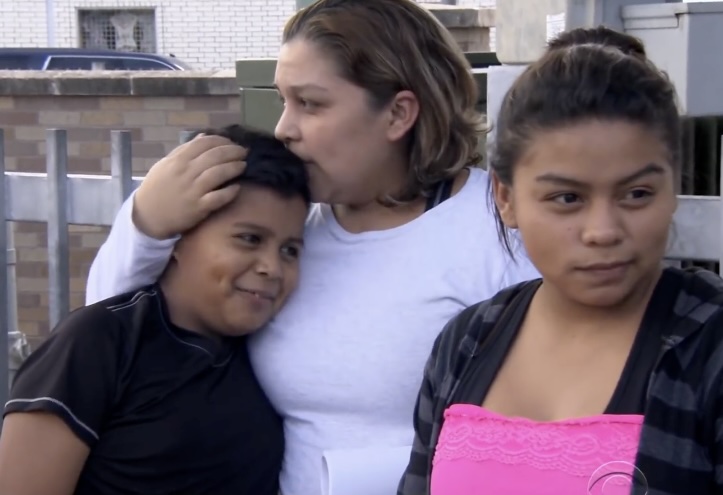
“Over half of the migrants were not given the opportunity to bring their children with them when they were deported . . . and many were unable to even get basic information about their childrens’ whereabouts or care.”
According to Human Rights Watch, the 1,360 children who remain unaccounted for from the first Trump administration amount to nearly 30 percent of the children separated during that time. According to ProPublica, this year ICE has sent more immigrant children into the federal shelter system than in the previous four years combined, and new data suggests families are being separated.
For children who are separated from their parents or guardians during deportation, the emotional toll can be severe and they may never recover. When a child is deported, the family may attempt to reunite, which can lead to long periods of separation, legal struggles, and further emotional distress. Forced family separation destroys lives and is a crime under international law.
Immigrant rights groups are actively fighting the immoral separation of families during deportation through legal action, advocacy, and direct services. Groups provide legal representation, advocate for policy changes, and support family reunification efforts. Concerned individuals are also stepping up to document these injustices and defend immigrants. This effort needs our help!
There are two very disturbing new trends we are now noticing, and both involve the separation of children from their parents.
Unaccompanied children are sent to the Rio Grande Valley in south Texas for likely deportation
Laura Peña, director of the South Texas Pro Bono Asylum Representation Project, or ProBar, said that about 50 children so far have been sent to south Texas from other states in the past few months and are being held in four detention facilities operated by the Department of Health and Human Service’s Office of Refugee Resettlement (ORR). There are a lot of available beds in the Rio Grande Valley due to the militarization of the border that’s been going on for many years.
“The landscape at the border has shifted. Instead of being a front line for responders for people seeking access to asylum, we are now the last line of defense, doing everything we can to prevent immigrant adults and children detained in immigration custody from being sent one direction — south of the border,” Peña said.
Already in the Rio Grande Valley there are about 500 unaccompanied migrant children being housed in about 15 ORR facilities, which is about one-fourth of the 2,000 kids being held by ORR nationwide. This is a pilot program. She worries they are being sent there in preparation for deportation to their home countries and that many more might be sent there.
Parents are deported to Honduras without their children
After visiting Honduras and speaking to deportees there, Women’s Refugee Commission, and Physicians for Human Rights report that over half of the migrants were not given the opportunity to bring their children with them when they were deported. Many had made it clear they wanted to have their children deported with them, and many were unable to even get basic information about their childrens’ whereabouts or care. One such mother, deported without her two-month-old child, a US citizen, was frantic to try to get her baby back.
According to Human Rights Watch, failure of a government to disclose the circumstances and whereabouts of separated children to their parents meets the definition of enforced disappearance. Even a single instance of enforced disappearance or torture is a crime under international law. Forcible family separations may also constitute torture, the intentional infliction of severe suffering for an improper purpose by a state agent.

Karel Riley works with the People’s Tribune, and its bilingual sister publication, Tribuno del Pueblo, as a writer and contributor on human rights and women’s issues. “I’ve been a feminist since early adulthood. As a clerical worker, I joined a union drive with AFSCME seeking comparable wages to men for female-dominated jobs, and we were partially successful. In the mid-80’s our union participated in the historic Hormel strike in Minnesota. Later, I joined others in support of a local welfare rights organization,” she says.

