


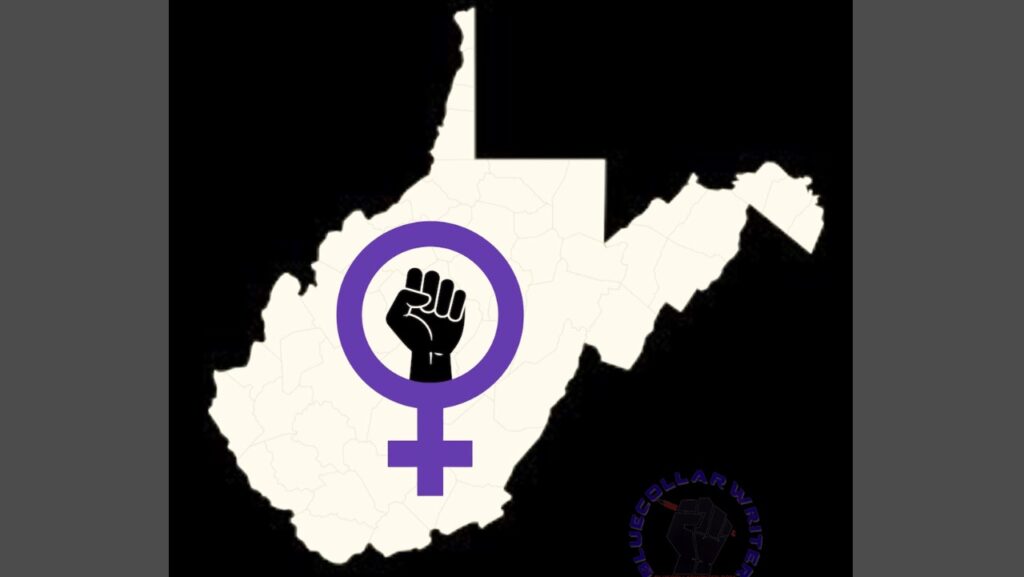
Editor’s note: This article by Matt Alley of BlueCollarWriter Labor Media about the surge of women filing to run in the West Virginia primary is used here with permission and you can see the original here.
“The surge of Democratic women filing to run in West Virginia’s 2026 primary is not just a political development—it is a moral signal. It is a reminder that this state is not done speaking for itself. These women are stepping forward not because the system has been kind, but because the system has failed too many people for too long.”
I write this from the Kentucky side of the line, but anyone who knows these hills understands that state borders don’t mean much in the coalfields. The Tug Fork River doesn’t divide our lives as neatly as a map would have you believe. Families cross back and forth. Jobs cross back and forth. Interstate commerce crosses back and forth. Friendships cross back and forth. I’ve crossed back and forth more times than I can count—working in West Virginia, breaking bread in West Virginia, building relationships in West Virginia. In every way that matters, I’ve always felt more like a regional resident of Appalachia than a citizen of one particular side of an invisible line.
That’s why what happens in West Virginia has never felt distant to me. When the state’s political culture was flooded by outside money and corporate influence, when “right to work (for less)” was forced onto a people who built this country with their labor, it didn’t just feel like one state losing something. It felt like all of Appalachia losing something. A proud union stronghold—one that once stood as a national symbol of working-class resistance and solidarity—was hollowed out by policies designed to weaken workers and empower corporations. The result wasn’t just legislative change; it was cultural erosion. Community was replaced with competition. Solidarity was replaced with suspicion.
That transformation broke my heart. I watched a place I loved get flattened into a political stereotype, written off by outsiders who never bothered to learn the history of these communities or the dignity of the people who live here. I watched national interests use West Virginia as a testing ground for anti-worker policy, then walk away while communities were left holding the consequences.
Which is why this moment matters.
The surge of Democratic women filing to run in West Virginia’s 2026 primary is not just a political development—it is a moral signal. It is a reminder that this state is not done speaking for itself. These women are stepping forward not because the system has been kind, but because the system has failed too many people for too long. They come from working-class communities. They carry lived experience, not consultant-approved slogans. They are running because they want change, because they want their neighbors to be heard, and because they believe government should represent the people who live here—not the special interests and corporate checkbooks that too often write the script.
This is what breaking stereotypes actually looks like. Not symbolism for its own sake, but leadership rooted in care for community, accountability, and the stubborn belief that democracy should belong to the people who do the work and live with the consequences. For too long, politics in this state has been dominated by a narrow vision of power. This wave of women is widening that vision and calling the political culture back to something more honest and grounded.
West Virginia has always had a complicated relationship with rebellion and conscience. The spirit of John Brown is still in the air—not as a call to romanticize the past, but as a reminder that there are moments in history when neutrality becomes complicity, when choosing justice over comfort carries a cost. This state has never been short on people willing to stand on the right side of hard questions. What we are seeing now is that same moral current stirring again—quietly, steadily, and with purpose.
To me, this feels like West Virginia remembering who it is. Not the caricature sold on cable news. Not the political identity imposed by billionaires and out-of-state strategists. But the West Virginia of mutual aid, neighbor helping neighbor, and standing together when the deck is stacked against you. The West Virginia that once taught the country what labor solidarity looked like. The Mountain State that knew dignity wasn’t something granted from above, but built from the ground up.
I’ll admit it: part of me has always hoped the state would officially adopt me one day. Maybe that only happens if state lines get redrawn, but my heart’s been there for years. The coalfields, the river valleys, the back roads through the mountains—those are as much my geography as any Kentucky county line. I’ve lived a regional life, shaped by the flow of people and work across the Tug Fork, by the shared culture of these communities, by friendships that never checked a map before they were formed.
So when West Virginia’s women step forward now—when they raise their hands and say, “We’ll carry this forward”—it feels personal. It feels like a home place finding its voice again.
To those women: thank you. Thank you for believing this state is worth fighting for. Thank you for believing representation should look like the people who do the work, raise the families, and keep the communities alive. Thank you for rejecting the idea that West Virginia’s story is finished, fixed, and permanently defined by its worst political chapters.
This is what solidarity looks like in real time. Not nostalgia. Not slogans. But people standing up, claiming space, and insisting that West Virginia belongs to West Virginians—not to corporate boardrooms, not to political profiteers, and not to anyone who sees these communities as disposable.
I’ll be watching from just across the river, cheering you on like a neighbor does—because that’s what I am.
Solidarity, always.
Matt Alley,
BlueCollarWriter Labor Media
Find Matt on Instagram at: https://www.instagram.com/bluecollarwriter

