


How My Childhood Taught Me Fear, Power, and Solidarity
— And Why Today Cuts So Deep
Editor’s note: This story was originally published by Matt Alley at BlueCollarWriter Labor Media here.
It isn’t my earliest memory, but it’s one of the ones that never loosened its grip on me. I was old enough to understand that something had gone wrong, but too young to fully grasp why. One day, my world suddenly got smaller. Doors stayed closed. Windows became borders. The outside — the place where I’d run, pretend, and lose track of time — was no longer safe.
When I was eight years old, my parents received an anonymous phone call. A stranger told my dad that if he didn’t “knock off his union talk (organizing),” something bad might happen to me. The caller didn’t just threaten. They described the patch of land where I liked to roam, swing on tree branches, and make up entire worlds in my head. This was the 1980s — before caller ID, before *69, before any easy way to know who was on the other end of the line.
For what felt like months, I wasn’t allowed to go play. I’d stare out the window at the trees and wonder who had stolen that small, ordinary freedom from me. I obsessed over the question: who was it? A classmate’s parent? Someone we waved to in passing? Someone who smiled in public and threatened children in private? How does a grown adult decide that intimidating a kid is an acceptable way to settle a workplace dispute?
But my dad didn’t back down. Neither did the coworkers he was organizing with. Together, they kept going. Together, they eventually helped win a union at their workplace. Years later, I asked him if he was scared. He didn’t pretend he wasn’t. He said, “Of course I was.” Then he told me something that stuck with me for life: he did it so I wouldn’t grow up thinking I had to live in fear — or that I had to kiss a boss’s ass just to keep a job.
Maybe you could call that part of my origin story in the labor movement. I didn’t grow up reading theory. I grew up watching what fear does to people — and what solidarity can do in spite of it.
That moment shaped how I understand cruelty and cowardice. It taught me that some of the worst people in the world aren’t cartoon villains — they’re regular adults who choose power over people. They’re the ones who lick boots instead of standing up for what’s right. The ones who threaten a child, then clock in the next morning and tell themselves they’re just “doing what they have to do.” Back then, they hid anonymously behind phone lines. Today, too many of them hide behind masks, badges, uniforms, bureaucratic language, or internet anonymity. Same cowardice. New disguises.
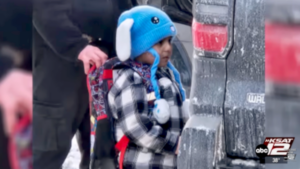
As an adult, watching this country right now, I realize that mindset didn’t disappear. It metastasized. And damn right what’s going on today hits me hard, right to my soul’s core. When I see children treated as tools, leverage, or collateral damage, it drags me straight back to being eight years old, realizing that some adults are perfectly willing to put fear into a kid if it helps them protect power.
We are living through a wave of cruelty dressed up as policy, and a collapse of empathy that should terrify anyone paying attention. Families torn apart. Children caught in the gears of politics. Kids practicing for violence in schools as if that’s a normal part of growing up. Every time someone shrugs and says, “That’s just how it is,” another piece of our shared humanity gets quietly buried.
What breaks me is how many people are willing to excuse it. How many are willing to look away. How many are more worried about staying in good standing with power than standing up for the vulnerable. That’s the same moral rot I saw as a kid — just scaled up, institutionalized, and sanitized with official language and legal jargon. Bootlickers don’t just enable cruelty — they provide the cover that lets cruelty pretend it’s normal, legal, and inevitable.
And yes, it’s hard to come to terms with the fact that a huge chunk of this country seems perfectly comfortable with that trade-off. Comfortable sacrificing empathy as long as they feel close to power. Comfortable letting other people’s kids pay the price. History is full of people who told themselves they were just following the rules. It has never judged them kindly.
But here’s the part I refuse to give up on: I’ve also seen what courage looks like. I saw it in my dad and his coworkers when they stood together instead of folding. I see it in people who show up for their neighbors, who speak out when it would be easier to stay quiet, who refuse to let cruelty become “normal.”
Fear is real. I learned that young. But so is solidarity. So is choosing people over power. So is teaching the next generation that you don’t survive by licking boots — you survive by standing together.
That’s not naïve hope. That’s learned hope. And it’s the only kind worth holding onto.
Find Matt on Instagram at: https://www.instagram.com/bluecollarwriter

