


Yesterday I drove past a community outreach building I’ve seen a hundred times before.
Nothing fancy. Just a place people go when life gets heavy and pride has to take a backseat to survival.
Most days you barely notice it.
Yesterday you couldn’t ignore it if you tried.
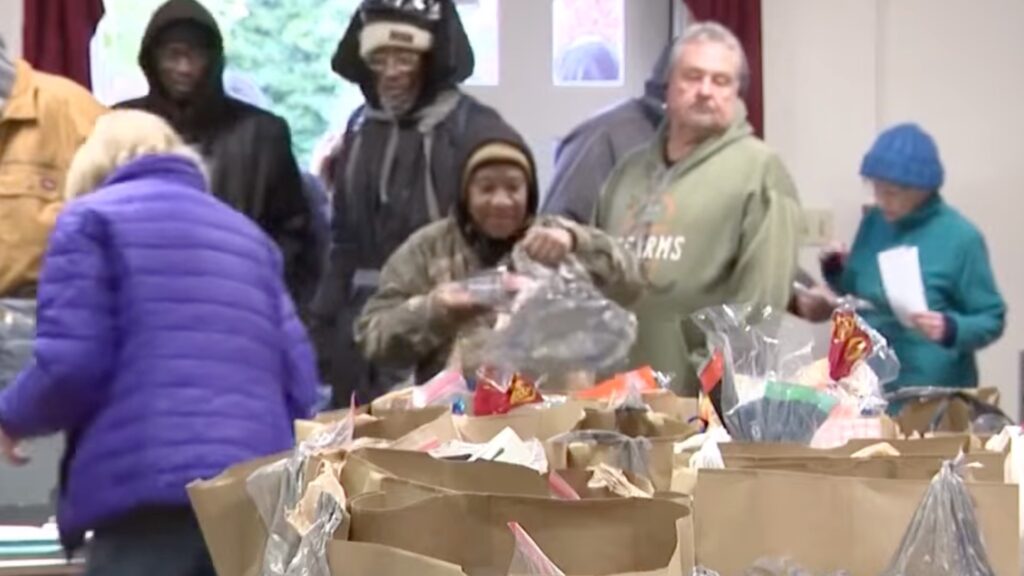
The line stretched out the door and across what passes for a sidewalk — really just a faded strip of parking lot that was never meant for foot traffic, never meant to hold human need — before spilling toward the street.
I have never seen a line like that there.
Not once.
People stood quietly. No chaos. No shouting. Just patience. The kind of patience you learn when options start running thin.
And what struck me hardest wasn’t just the length of the line.
It was who was standing in it.
All kinds of people.
Different ages. Different lives. Different stories I’ll never know.
What stayed with me most were the seniors — folks who should be enjoying some measure of peace after a lifetime of work — and young mothers keeping children close, managing that quiet balancing act between protection and worry.
There were no easy labels in that line.
Just neighbors.
You can listen to economists debate numbers. You can watch politicians argue over growth charts and stock markets. You can hear television personalities insist the economy is strong.
But the real economy doesn’t live on Wall Street.
The real economy stands in line hoping the food doesn’t run out before their turn comes.
And I know this isn’t just happening where I live.
I hear it from friends across Appalachia. From cities. From small towns. From conversations with people too proud to complain publicly but honest enough to admit things feel tighter than they used to.
Food banks are busier everywhere.
Outreach centers are seeing new faces everywhere.
More people — from every walk of life — are feeling the squeeze.
This is the true economy.
Measured not in stock prices or quarterly reports, but in grocery receipts, medication costs, rent notices, and quiet anxiety carried home at the end of the day.
And let’s be honest about something we don’t say loudly enough:
This isn’t accidental.
Productivity went up. Profits went up. Executive pay exploded. Corporations celebrate record earnings while more Americans find themselves needing help just to get through the month.
That isn’t economics.
That’s greed.
We built an economy where stability feels fragile. Where fixed incomes don’t stretch far enough. Where raising a child costs more every year. Where a single emergency can turn stability into crisis overnight.
Greed is bleeding people dry.
And the cruelest part is this: many of the people standing in those lines spent decades doing exactly what society asked of them — working, raising families, contributing, believing that effort would eventually lead to security.
Now they’re standing on cracked asphalt waiting for help.
Nobody looked lazy.
They looked tired.
Bone-tired.
The kind of tired that comes from carrying worry you never expected to carry.
Communities will always step up. Neighbors helping neighbors is one of the most beautiful things about this country.
But charity was never meant to replace dignity.
Food lines should not become normal in the richest nation on Earth.
Yesterday wasn’t just something I saw.
It was a warning.
Because when lines like that start appearing everywhere — filled with seniors, young families, and people you recognize as your own neighbors — it means something deeper is happening.
The system isn’t bending anymore.
It’s breaking.
Take care of each other. Check on your neighbors. Offer grace where you can.
And don’t let anyone tell you this is normal.
It isn’t.
Find Matt on Instagram at: https://www.instagram.com/bluecollarwriter

