


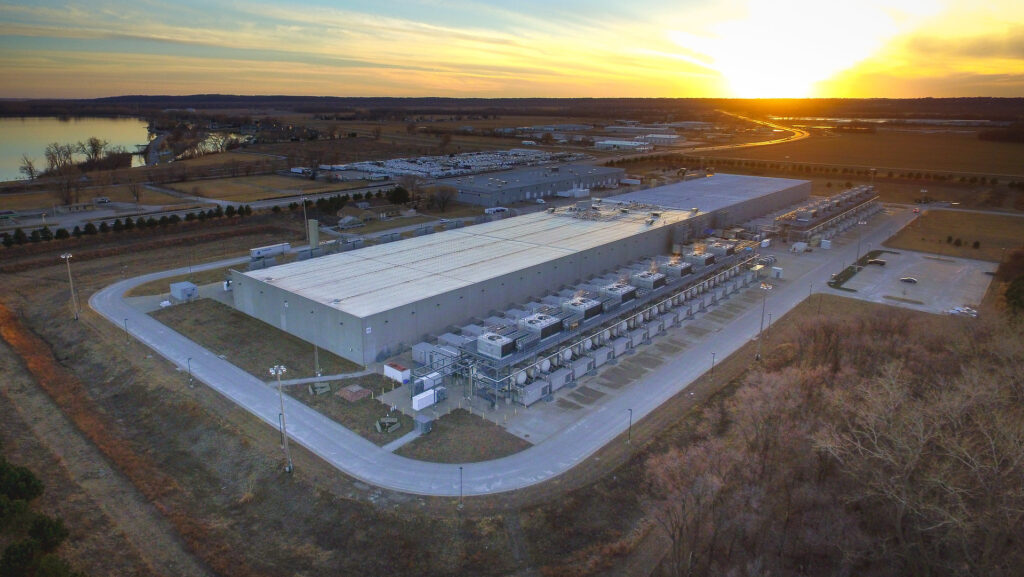
Editor’s note: This information about the data center issue was compiled and edited in part from a slide presentation created by Joshua Moroles, who lives in the Texas Rio Grande Valley, one of the hottest regions in the U.S. Texas is likely in a long-term drought, and has its own electrical grid separate from the rest of the nation which has already failed before with the loss of life of hundreds of people. Different regions of the country will be dealing with slightly different issues, but how data centers impact Texas gives us an idea of the issues to be looking for. This piece is one of three. The other two deal with the harms and dangers of data centers, and why the push for so many data centers.
What Is a Data Center?
Servers — Thousands to millions running 24/7
Cooling Infrastructure — Constant heat removal and airflow
Electrical Systems — Industrial-scale power delivery
Backup Systems — Redundancy to prevent downtime
They are large industrial facilities housing thousands to millions of servers that power cloud computing, AI, social media, streaming, financial systems, and government operations. Unlike other buildings, data centers run every minute of every day, consuming power at industrial scale and generating intense heat. Power, cooling, and backup systems are fundamental, not optional.
Texas: Second-Largest Data Center Market
- 570+ Data Centers in Texas since 2017
- Demand Has Increased 7x since 2023 driven by AI model training and hyperscale infrastructure
- 5,000+ Facilities in the U.S. – the world’s largest concentration
Growth accelerated dramatically from 2019 onward, with Texas becoming a major hub. Once a state becomes favorable, infrastructure attracts more infrastructure, growth compounds quickly.
How Much Water Could a 2 Gigawatt (GW) Data Center Use?
Here’s an evaluation of a worst-case demand using industry data for hot climates. Even if effluent water is used, this volume still comes from a regional system that may already be under stress.
- 10.5 BILLION Gallons Per Year At full 2 GW capacity
- 28.8 MILLION Gallons Per Day
- 96 THOUSAND Households – Equivalent daily water usage
Cooling: Three Main Systems
- Air-Based Cooling– common in older facilities. Often paired with evaporative towers. High water use in hot climates.
- Water-Based Cooling — required for AI workloads. Water use depends on design. Even so-called ‘closed loop’ systems use a lot of water. https://www.facebook.com/share/r/18Nd816xtf/
- Hybrid Cooling — most common for 2025 – 2026 projects. Water for high-heat components, air for the rest. Reduces but doesn’t eliminate water use.
Data Centers Never Turn Off
They run 24/7/365. Always consuming power. Always generating heat. When the Texas grid fails, as it has in the past, diesel or gas generators start automatically. Polluting emissions increase when communities in hot areas are already stressed.
Constant demand on the grid and on water supplies. No flexibility during peak events. No pause during emergencies even when households are asked to conserve. Once built, demand for water and electricity are permanently locked in.
Once one facility is approved, more follow. Demand for resources increases. Backup generation events increase. Strain becomes normal instead of exceptional.
Can a hot region, like Texas, with its lone strained grid, growing heat risk, and ongoing drought support infrastructure that never shuts off? Because once it’s built, there is no off switch, because it has to keep running to remain profitable.
What Communities Deserve
- Clear answers up front about water and energy trade-offs, not marketing language.
- Understanding impacts and voicing concerns before approvals happen.

Karel Riley works with the People’s Tribune, and its bilingual sister publication, Tribuno del Pueblo, as a writer and contributor on human rights and women’s issues. “I’ve been a feminist since early adulthood. As a clerical worker, I joined a union drive with AFSCME seeking comparable wages to men for female-dominated jobs, and we were partially successful. In the mid-80’s our union participated in the historic Hormel strike in Minnesota. Later, I joined others in support of a local welfare rights organization,” she says.

